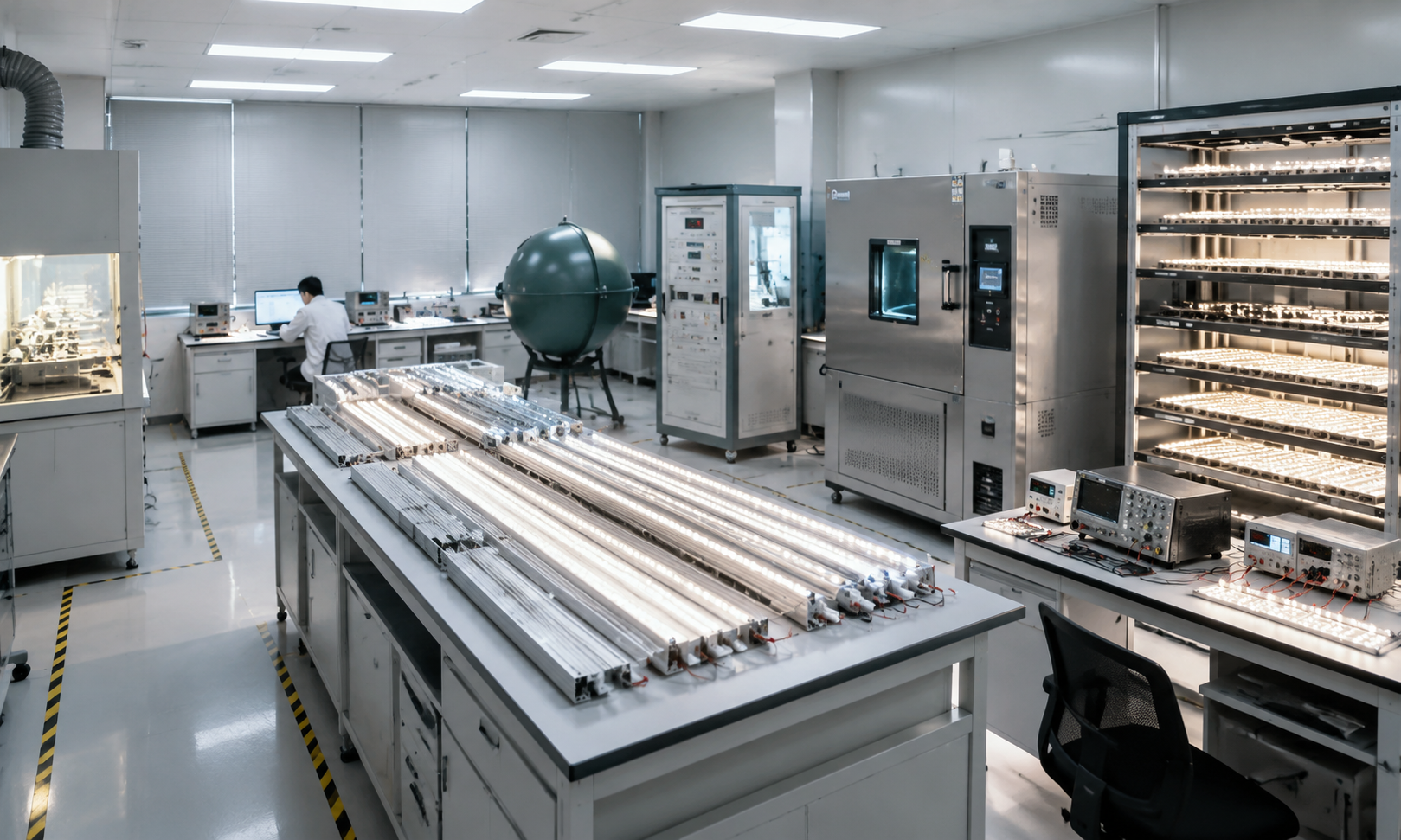
Cabinet & Furniture Lighting (Kitchen, Wardrobe, Vanity & Mirror Cabinets)
Engineering methods for dotless cabinet lighting with tight cut/fit tolerances, consistent color, and installer-friendly wiring for kitchen, wardrobe, and vanity/mirror cabinets.
WHERE_IT_APPLIES
- Kitchen cabinets, wardrobes, vanity cabinets, mirror cabinets, bathroom cabinets
- Operating temperature: +1°C to +45°C
- Power: 12V to 24V DC
- Installation: under panels, under countertop, toe-kick line, or above/below mirrors
- Often requires sensors (PIR/hand-sweep) and centralized power via a junction box
- Exposure: occasional cleaning agents
- Mounting: aluminum profile + clips (ultra-slim profile if thickness is limited)
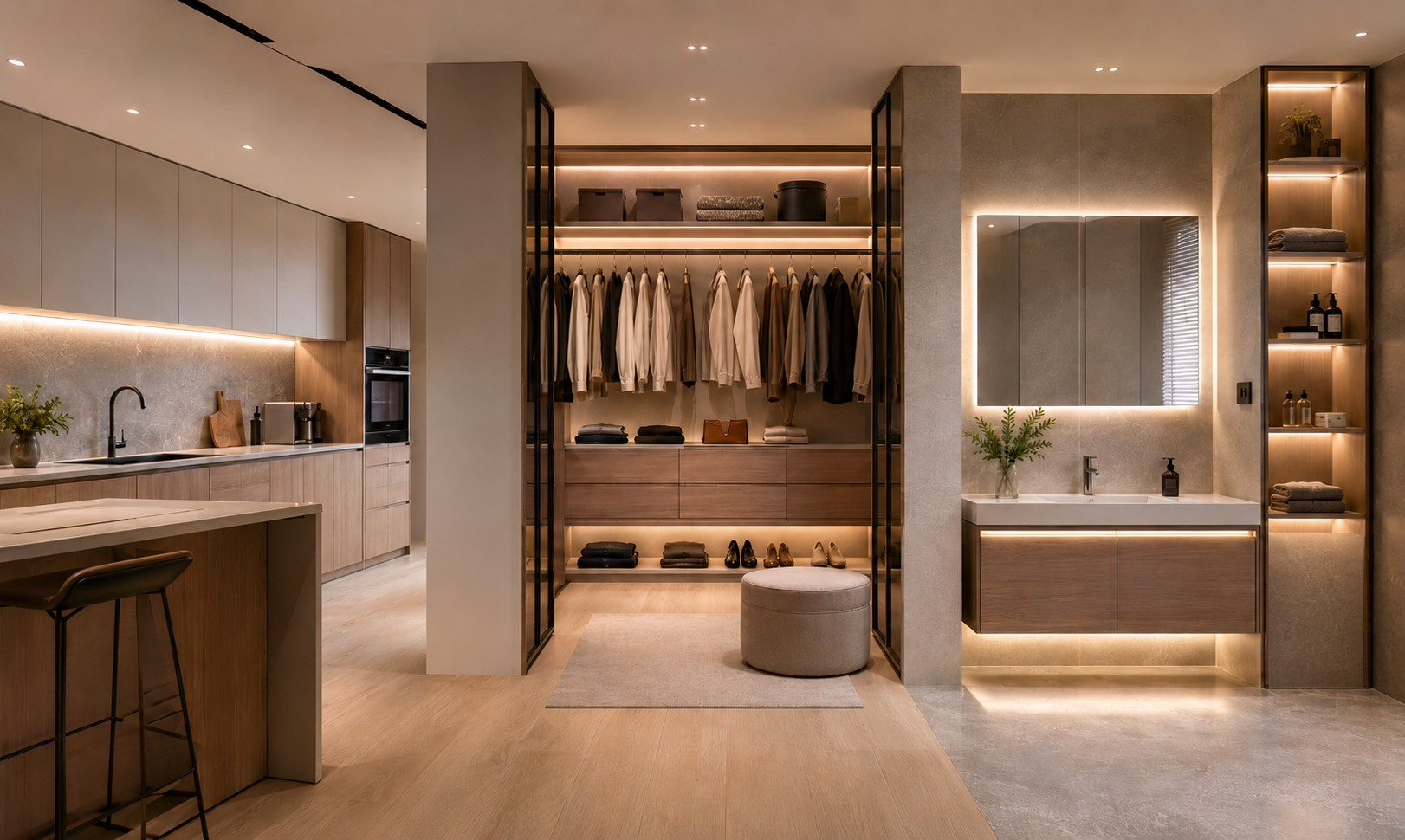
CAPABILITY_SNAPSHOT
- Goal: dotless, uniform lighting with clean concealed wiring and fast installation—without heat build-up in limited cabinet structures.
- Core risks: hotspots/shadows, complex wiring in tight spaces, insufficient thin-profile mounting, heat management, inconsistent color across multiple strips.
- Deliverables: cut-to-fit + quick-connect harness + thin-profile mounting + sensor integration guidance + validation pack.
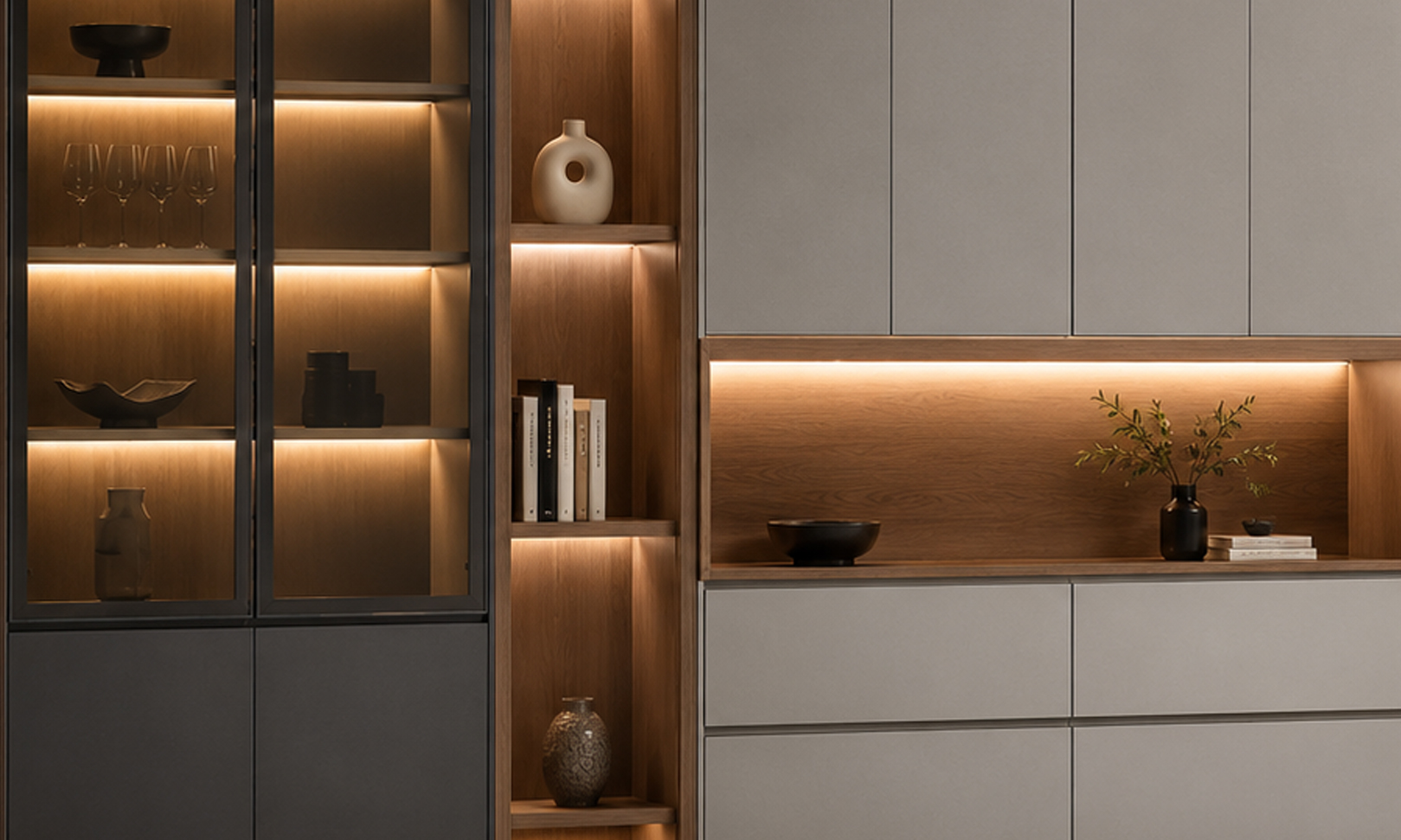
INPUTS_WE_NEED
- Cabinet type and use case: kitchen, wardrobe, vanity, mirror, bathroom or display furniture
- Cabinet drawings showing panel thickness, shelf layout, door type and available cable-routing paths
- Exact installation position: under-cabinet, inside shelf, toe-kick, drawer, hanging rail or mirror perimeter
- Available mounting depth and maximum allowable profile height or width
- Required lighting effect: dotless appearance, task lighting, accent lighting, mirror lighting or interior illumination
- Surface and material details: wood, MDF, laminate, glass, aluminum, plastic or painted panels
- Preferred switching method: door sensor, PIR sensor, hand-sweep sensor, touch dimmer or wall switch
- Driver and junction-box location, number of lighting zones, cable exit direction and service-access requirements
- Required CCT, CRI, dimming range and colour consistency across multiple cabinets or rooms
- Installation quantity, cut lengths, connector orientation and packaging requirements for factory assembly or field installation
PROBLEMS_WE_SOLVE
- Cut-to-any-length requirement; quick plug-in terminals for easy powering
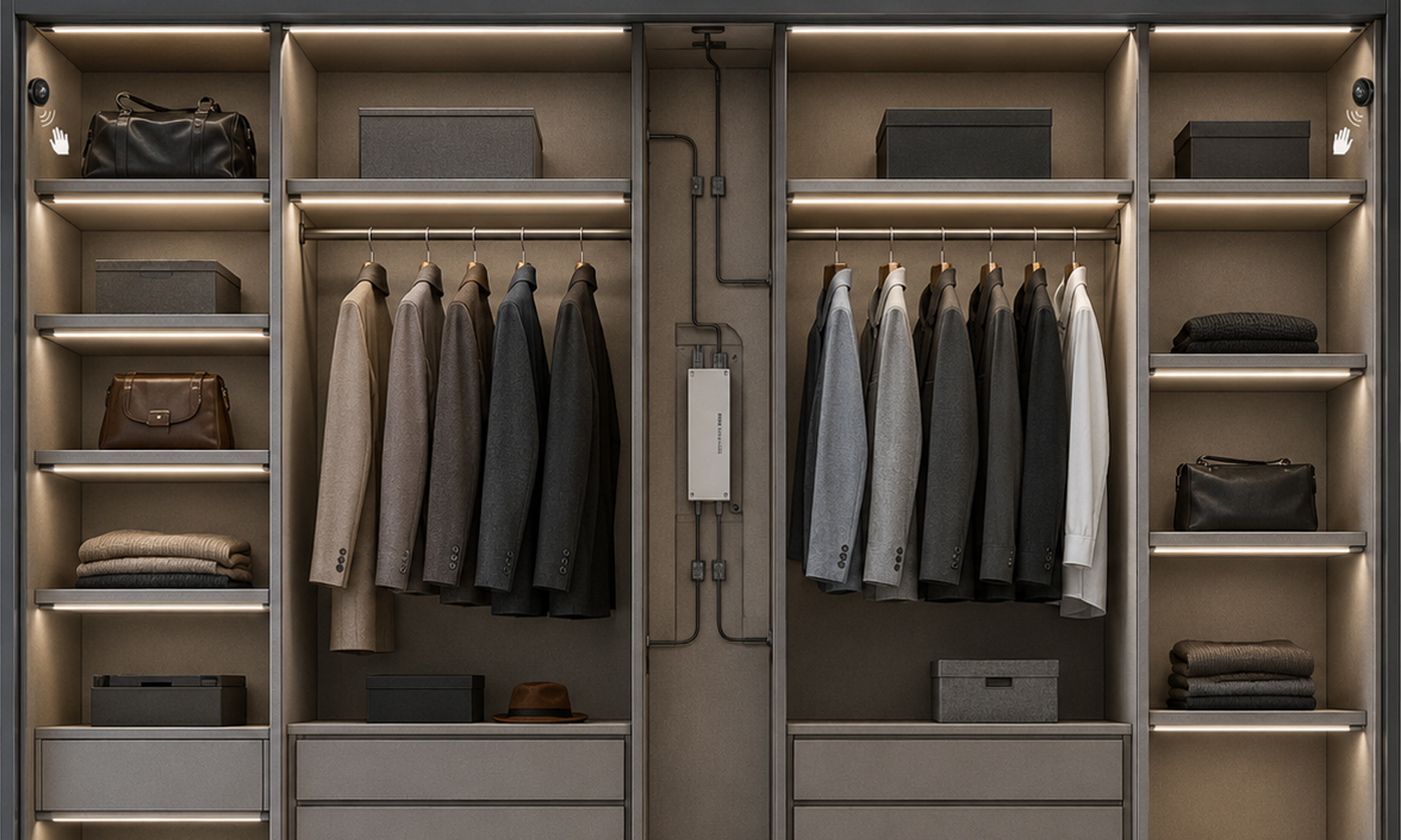
- Concealed wiring and easy installation
- Multiple strips share a junction box (centralized power distribution)
- Need PIR or hand-sweep sensing for smart on/off
- No shadows or hotspots; uniform illumination required
- Ultra-thin aluminum profile needed due to limited panel thickness
- High LED density with low heat to protect cabinet structure and safety
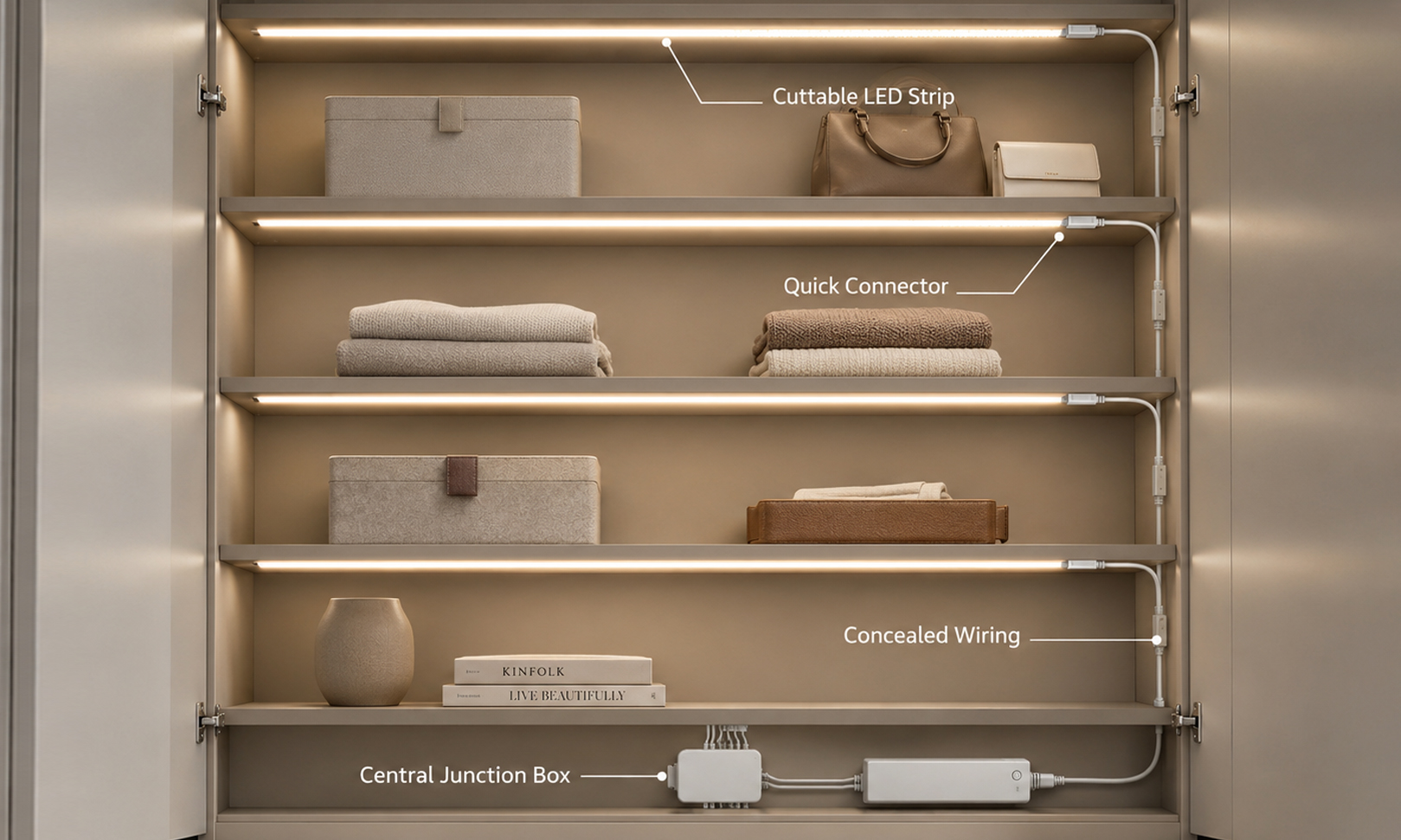
KEY_ENGINEERING_CONTROLS
- Dotless optical design: match COB strip, LED pitch, diffuser and profile depth to the viewing distance and cabinet finish
- Ultra-slim profile selection: balance mounting depth, light output and heat dissipation for thin wood, glass or metal panels
- Cut-to-fit production: define cut lengths, end-cap treatment and connector direction for each cabinet configuration
- Concealed wiring design: route cables through drilled panels, shelf channels or rear voids while keeping service access practical
- Quick-connect system: use keyed connectors, strain relief and clear harness labels to reduce installation errors on site
- Sensor integration: define sensor type, trigger distance, mounting position and wiring logic for doors, drawers and hand-sweep control
- Junction-box planning: match output count, load per channel and driver location to multi-shelf or multi-cabinet installations
- Colour consistency control: lock CCT, CRI and SDCM targets for visible runs that sit side by side in the same furniture system
- Thermal verification: confirm temperature rise at the profile, diffuser and adjacent wood, laminate or plastic surfaces
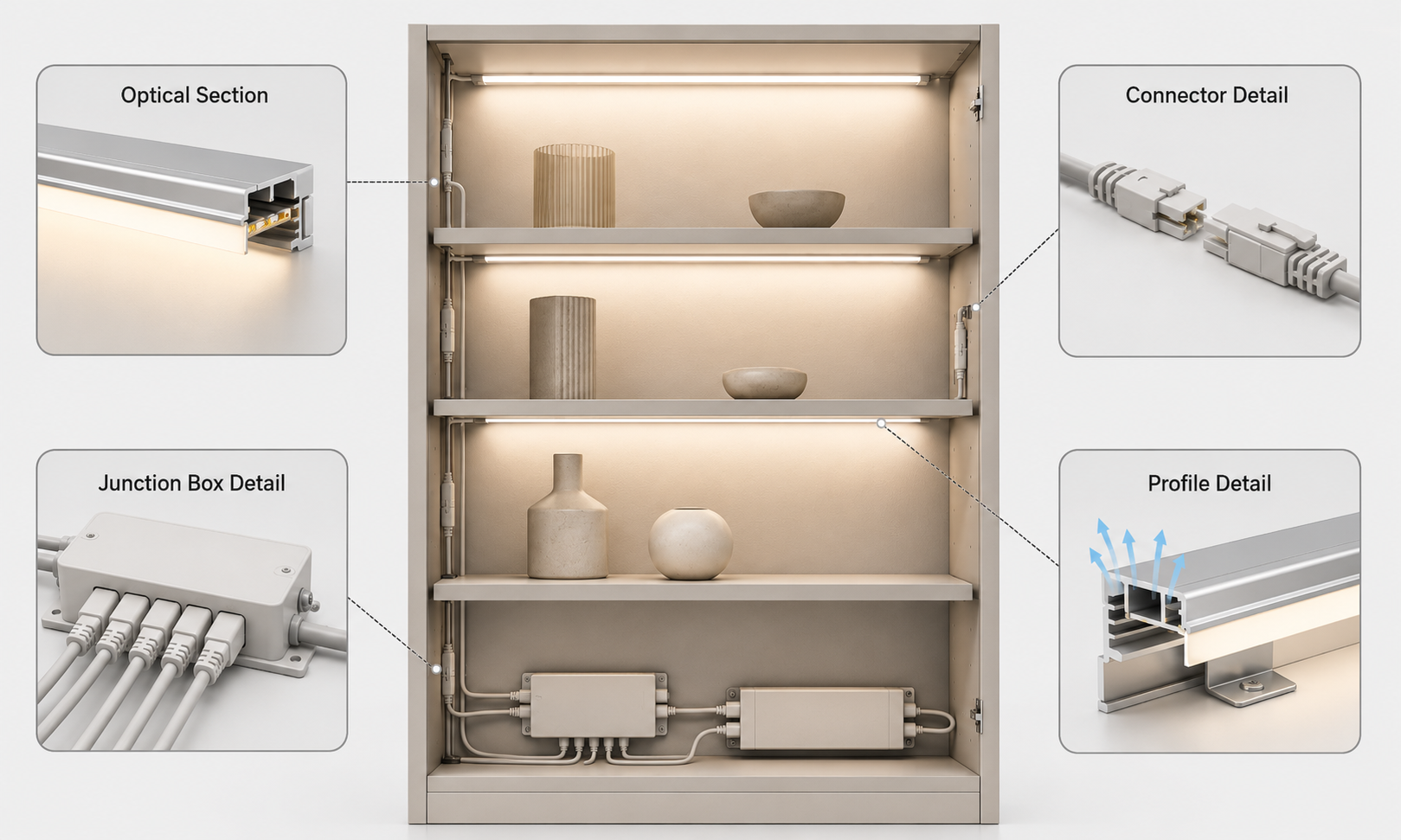
VALIDATION_TESTING
- Dotless appearance check | Pass: no visible LED points, harsh hotspots or dark gaps at the agreed viewing distance
- Installed uniformity check | Pass: consistent illumination across shelves, cabinet bays or mirror edges
- Profile and panel temperature-rise test | Pass: temperatures remain within the agreed limit for adjacent furniture materials
- Cut-length and fit check | Pass: each light and profile fits the drawing-defined mounting position without field rework
- Quick-connect cycle test | Pass: connectors remain secure and functional after repeated installation and service cycles
- Sensor function test | Pass: door, PIR, hand-sweep or touch control performs reliably without false triggering
- Colour consistency sampling | Pass: adjacent fixtures meet the agreed CCT, CRI and SDCM requirement
- Junction-box load and voltage-drop check | Pass: output remains stable across the longest cabinet run and all lighting zones